How to Identify UK Garden Birds by Song: A Seasonal Listening Guide
A blackbird singing from a chimney pot at ten past five in the morning tells you more about your garden than an afternoon spent watching the feeders. Song carries over fences and through closed windows, reaching birds you would never otherwise see. Most of us hear far more species than we ever manage to look at. Learn a dozen voices and a wall of noise becomes a set of recognisable neighbours.
You do not need perfect pitch or expensive equipment. You need a rough idea of what sings when, a handful of phrases to hang your memory on, and the patience to learn one bird at a time.
Garden birds are stubbornly secretive. Wrens slip through the base of a hedge, dunnocks shuffle under shrubs, and robins sing from deep inside cover. Sight gives you glimpses; sound gives you the whole bird.
Song is also seasonal, which makes identification far easier than it first appears. In a single week in late April you might hear twenty species, but only four or five of them will be singing from the sort of places you can actually stand and listen to.
The mistake most people make is trying to learn everything at once. Pick three or four species this spring and ignore the rest. The knowledge sticks because it is anchored to real birds, in real weather, in a place you know.
The listening year begins earlier than most people expect. By January, great tits are ringing out their two-note tea-cher, tea-cher from the top of a bare tree, and song thrushes are belting out repeated phrases from a favourite song post at first light.
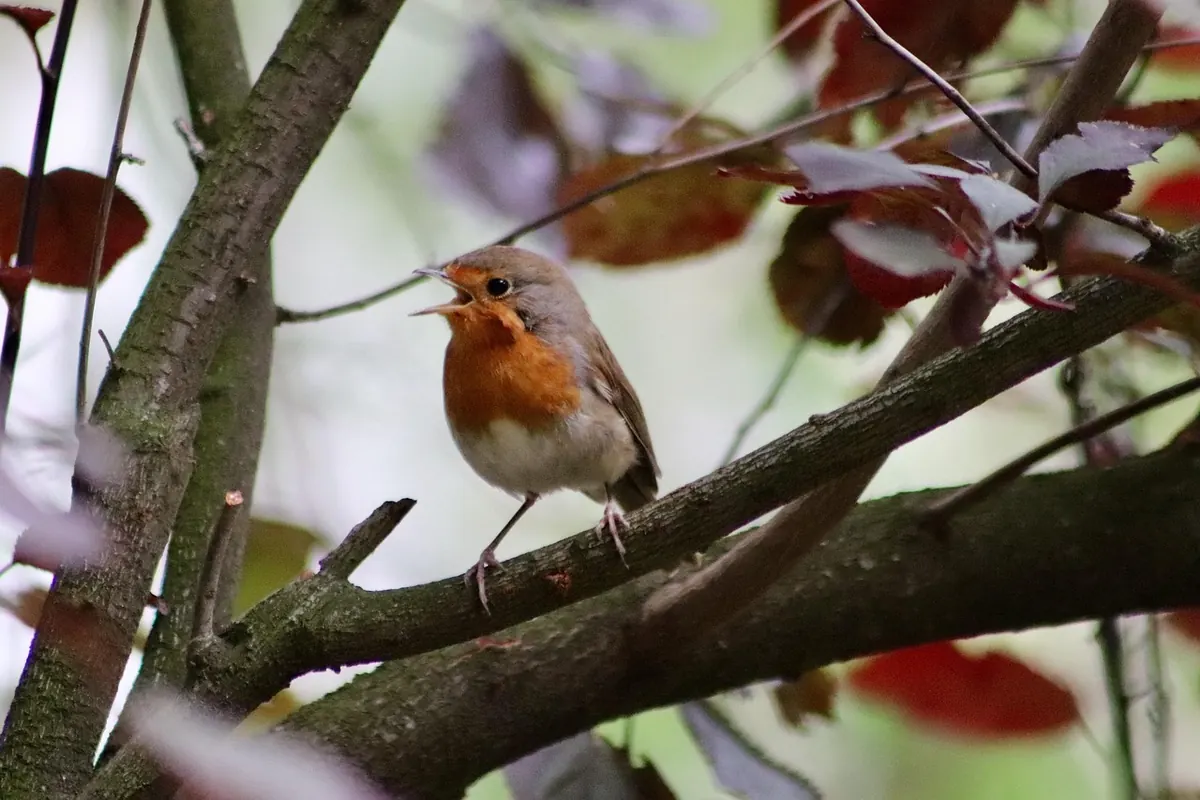
Robins sing almost all year, but the winter song has a different character: thin, sweet and wistful, delivered in short phrases with clear pauses, sometimes from a street tree under a lamp. Mistle thrushes, meanwhile, sing from high exposed branches in wind and rain — a wilder, more hurried sound than the song thrush, with less obvious repetition.
By March, blackbirds have joined in. Their song is unhurried and fluty, phrases delivered with rich gaps between them, often ending in a slightly squeaky, off-key note that gives the whole performance away.
Get out between 5.30am and 7am in March and you will hear this early shift almost on its own, before the tits and finches fill in around it.
This is the peak. Chiffchaffs arrive from mid-March and sing their own name on a flat, down-up rhythm. Blackcaps follow in April with a rich, fluty song that sounds like a blackbird in a hurry, often with a scratchy note buried in the middle of a phrase. Swifts start screaming over rooftops in early May, and swallows and house martins chatter above the gardens.
The dawn chorus in mid-May starts around 4am and thins out by about 7am. Trying to chase every voice is futile. Instead, stand still in one spot for fifteen minutes and follow a single bird with your ears until you know its song well enough to hum it back. That one bird is worth more than twenty half-heard ones.
Dunnock or robin? The robin's phrases are more varied and sweeter, with real pauses between them. The dunnock chugs along flat and fast, without those gaps.
Chiffchaff or willow warbler? The chiffchaff simply repeats two notes. The willow warbler gives a soft, rippling cascade that slides downwards — more musical, less mechanical. In gardens you will meet far more chiffchaffs.
Great tit or coal tit? The coal tit is higher, faster and thinner, and often sings a three-part phrase — if-you-see-me — rather than two notes.
Blackbird or blackcap? The blackbird takes its time. The blackcap is quicker, more jumbled, and usually sings from cover rather than an open perch.
Song is seasonal, usually delivered from a perch, and repeated. Calls are short, year-round and functional: contact notes, flight notes, begging and alarm.
These smaller sounds are worth learning because they are the ones you will use most. A chaffinch's pink, a great tit's contact note, the ticking of a robin in the hedge — each tells you a bird is there without a single feather in view. Alarm calls are especially useful: a blackbird's sharp chink-chink or the thin whine of a blue tit usually means a cat or a sparrowhawk is about.
Two sounds to file away as useful rather than musical: the drumming of a great spotted woodpecker, which is a territorial signal rather than a song, and the screaming of swifts, which is simply what summer over a British street sounds like.
Singing fades from late June as birds moult and turn their attention to feeding young. What replaces it is the insistent, nasal whine of begging fledglings — worth learning so you do not spend July wondering what strange
Photo: Nennieinszweidrei / Pixabay
Previous Post
The Beginner's Guide to British Birdwatching: Binoculars, Field Guides and Your First Local Patch
Next Post
The Full-Day Birdwatching Checklist: What to Pack for Estuaries, Woodlands and Uplands